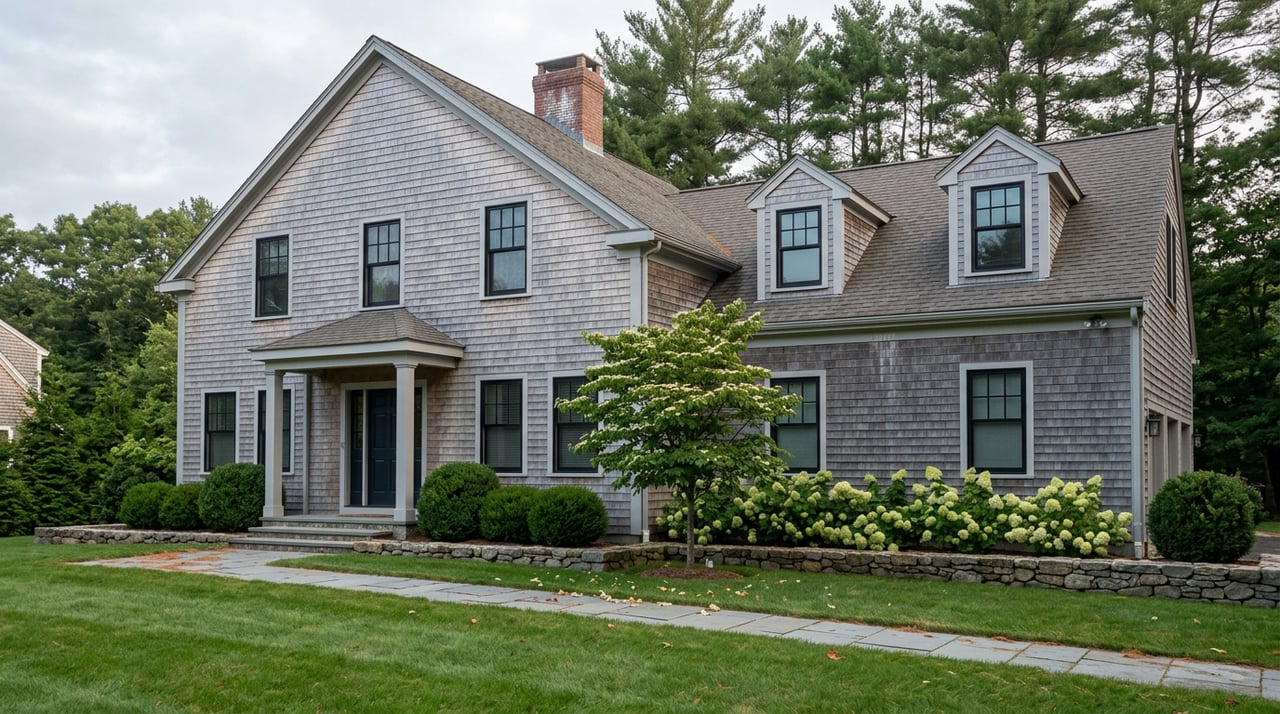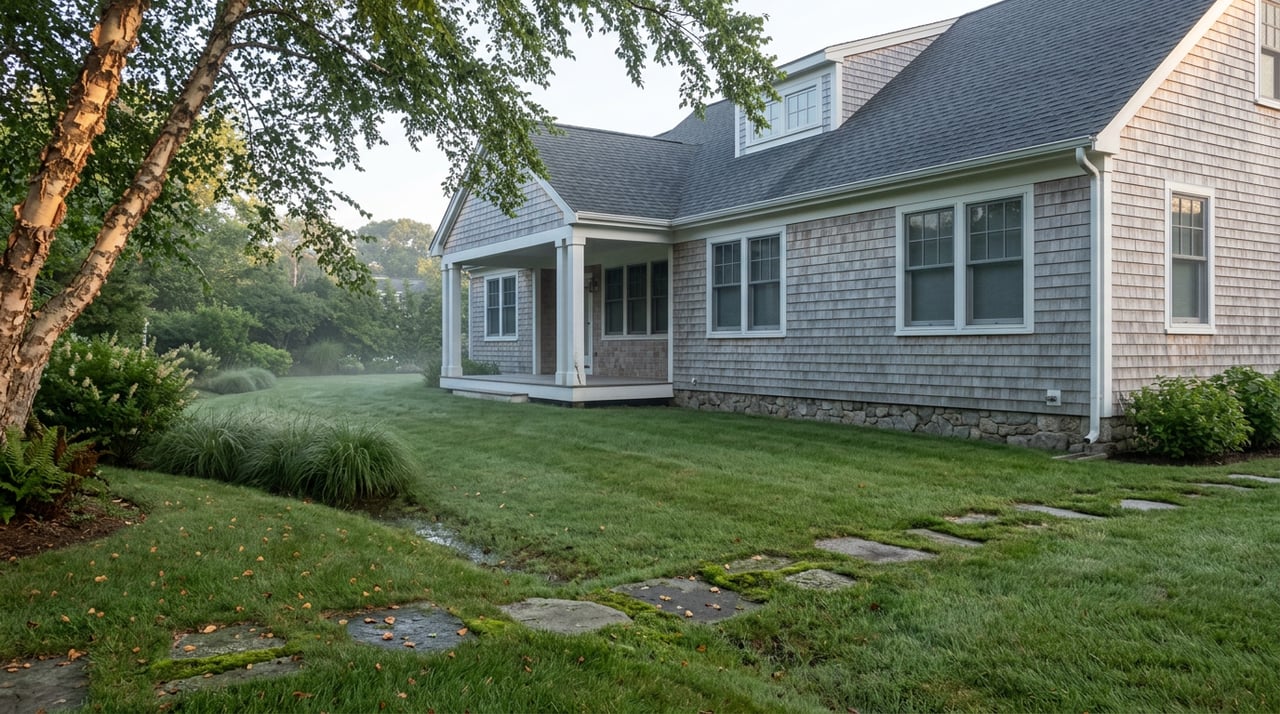
A buyer walks a half-acre lot on a quiet Sudbury road, sees a mowed lawn running back to a line of trees, and assumes the yard is just a yard. No standing water, no cattails, no obvious sign that anything unusual applies here. Six weeks later, mid-renovation or mid-permit, that same buyer learns the back third of the property sits inside the town's wetlands jurisdiction and has since long before they ever made an offer.
That gap between what a property looks like and what it legally is turns out to matter more in Sudbury than in most of the surrounding towns, because of a fact the town states plainly about itself: Sudbury is nearly a third wetlands. This isn't a point-in-time inspection item like a septic test that passes or fails on the day someone checks it. It's a standing condition attached to the parcel, and it was there before the current owner bought the house and will still be there after the next owner does too.
What "Nearly A Third Of The Town" Actually Means For A Deed
Sudbury's Conservation Commission has been overseeing this since 1962, and it manages eleven conservation lands for public use across town. The reason the jurisdiction is so widespread comes down to geography: the Sudbury River, Hop Brook, Pantry Brook, Landam Brook, and dozens of smaller feeder streams thread through nearly every section of town, creating what the town's own conservation office describes as a dense weave of riparian wetlands.
A Title 5 septic test tells you about a system's condition on a single day. Wetlands jurisdiction doesn't work that way. It's tied to the land itself, which means it transfers automatically with the deed, no re-evaluation required, no clean slate at closing. A property that was in jurisdiction under the previous three owners is in jurisdiction under the next one too, until the physical characteristics of the land itself change, which they generally don't.
Not All Wetlands Look Wet
This is the part that catches people off guard. The town's own conservation office puts it directly:
The rule: Not all wetlands LOOK wet.
A wetland, under both state and local rules, is defined by vegetation adapted to hydric soil and seasonal water saturation below the surface, not by whether there's visible standing water on the day someone walks the lot. Some of these areas support full stands of trees. Others look like an ordinary lawn for most of the year. A buyer evaluating a lot for a pool, a garage addition, or even where to put a shed can't rely on a visual check to know whether the Conservation Commission has a say in that decision.
The Buffer Zones, In Feet
Sudbury layers a local bylaw on top of the state's Wetlands Protection Act, and the combination creates several distinct buffer distances that determine when a project needs sign-off before work begins.
| Where the work happens | What it triggers |
|---|---|
| Inside a wetland, marsh, pond, stream, or the 100-year floodplain | Direct jurisdiction under the state Wetlands Protection Act |
| Within 100 feet of a wetland resource area | Adjacent Upland Resource Area review under Sudbury's own bylaw |
| Within 200 feet of a perennial stream | Riverfront Area review, plus added scrutiny if the stream is designated a Cold Water Fishery |
| Anywhere land will be filled, dredged, or have vegetation altered | Permit required regardless of distance, per the state act |
The state law's language is specific about what counts as regulated activity: "removing, filling, dredging, or altering" land, water, or vegetation in these areas without a permit. Sudbury's local bylaw goes further than the state minimum, which is why a property can be well outside a mapped wetland and still fall inside the town's 100-foot adjacent buffer.
The Exemption Everyone Assumes Covers Them
Here's where a lot of Sudbury homeowners get a false sense of security. The bylaw exempts routine maintenance, repair, or replacement of an already-existing, lawfully located single-family home or its appurtenances from needing a fresh permit. So if you're re-shingling a roof or replacing a window on a house that's already there, you're generally fine.
That exemption stops the moment a project changes the footprint or the ground. A new addition, a pool, an expanded driveway, tree clearing for a better view, or a septic system upgrade near a brook are treated differently, because those activities alter land, not just structure. And that septic detail compounds quickly: a system replacement near a wetland resource area can require both the standard Title 5 approval process and separate Conservation Commission sign-off, which means two review clocks running instead of one.
How A Filing Actually Moves: RDA, NOI, And The Calendar
When a property owner isn't sure whether their project triggers jurisdiction, the first step is usually a Request for Determination of Applicability, or RDA, filed with the Commission to get an official read on the boundary question. If the project does trigger jurisdiction and moves forward, a full Notice of Intent follows, which requires more detailed plans and goes through a public hearing.
This isn't theoretical. The Commission's own public document list includes a Request for Determination of Applicability filed for a specific address, 24 Woodside Road, in August 2025. These filings are address-specific, public, and searchable, which means a prospective buyer can check whether a property has ever gone through this process before.
The Commission also doesn't operate in a vacuum. Groups like the Hop Brook Protection Association and ongoing water chestnut management programs at Carding Mill Pond, Grist Mill Pond, and Stearns Mills Pond point to a level of organized local attention to these waterways that shapes how seriously reviews get taken and how quickly a hearing gets scheduled. Filing electronically through the state's eDEP system tends to move faster than paper applications, but even electronic filings still have to wait for a scheduled public meeting rather than an on-demand approval.
The Piece That Follows The Deed, Not The Sale: Conservation Restrictions
Separate from wetlands jurisdiction, some Sudbury properties carry a Conservation Restriction, or CR, a voluntary and typically perpetual agreement that limits future development on part of a parcel. Owners grant these for a mix of reasons: protecting a property's natural features, keeping land in the family long-term, and in many cases, capturing a federal income tax deduction along with local real estate tax benefits tied to the restricted value of the land. The Conservation Commission holds many of these CRs on private land across town.
A CR doesn't expire when a house changes hands. It runs with the land, which means a seller who doesn't flag it early risks having a buyer's attorney discover it during title review, well after both sides have already built expectations around what the property can become. Bringing it up before an offer, not after one, keeps the sale on the timeline everyone thought they were on.
What This Means Against A 19-Day Market
Sudbury's current market moves fast enough that any friction point matters. Over the three months ending May 2026, Sudbury homes sold at a median price of $1.1 million, up 8.2% from the same period a year earlier, and typically went under agreement in about 19 days, compared with 15 days over that same window last year. A separate measure of estimated home value, tracking value rather than closed sales, put the typical Sudbury home at $1,075,935 as of late June 2026, up 1.6% year over year.
Nineteen days is not much runway if a wetlands question surfaces after an accepted offer. An RDA alone can take weeks to reach a hearing date, and a full Notice of Intent takes longer still. The properties that sell cleanly on that kind of timeline are usually the ones where the jurisdiction question got answered before the sign went in the yard, not during the inspection period.
Frequently Asked Questions
Does every property near water in Sudbury need a permit before any work? No. Routine maintenance and repair of an existing, lawfully built single-family home is generally exempt. New construction, land alteration, tree removal, and septic work near a wetland resource area are not.
What's the difference between an RDA and a Notice of Intent? An RDA asks the Commission to determine whether a property or project falls under its jurisdiction at all. A Notice of Intent is the full application required once a project is confirmed to be within jurisdiction and needs review.
Can a Conservation Restriction be removed before selling? Most CRs are written to be perpetual and are difficult or impossible to remove, since removing one would defeat the purpose of the original tax benefit and conservation intent. Sellers should treat an existing CR as a permanent feature of the property, not a negotiable point.
How can I find out if my Sudbury property is in wetlands jurisdiction before I list or make an offer? The town maintains a GIS map showing approximate wetland, stream, and buffer boundaries, and the Conservation Office can confirm jurisdiction on a specific parcel before any application is filed.
If you're weighing a purchase near one of Sudbury's brooks or thinking through how a conservation restriction affects your home's value before you list, Laura Rakauskas can walk through what it means for your specific property and your timeline. Let's Connect.